(Sports Feature) Inside Team USA’s Mental Health Movement
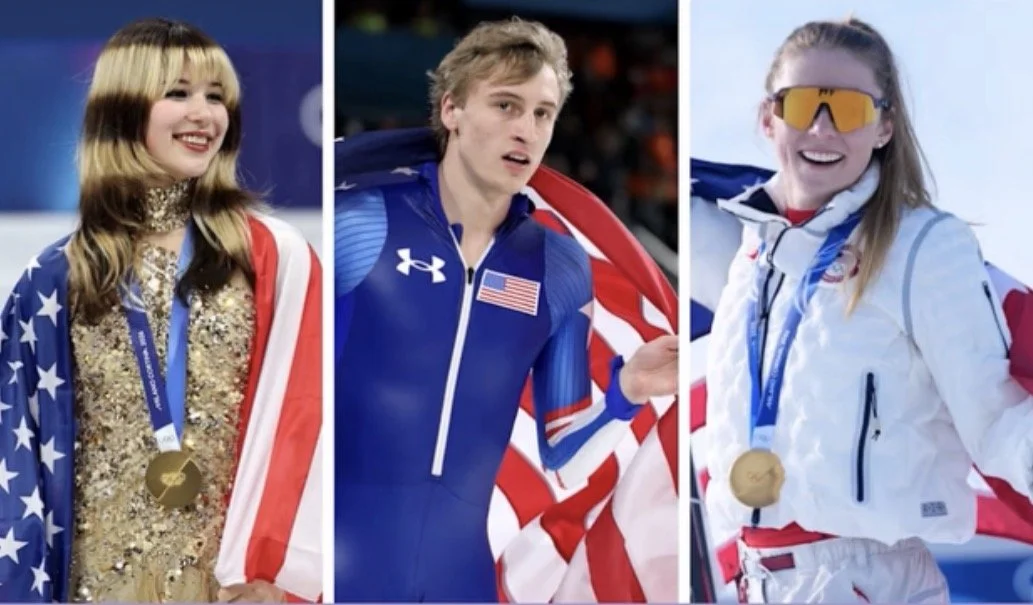
At the 2026 Winter Olympics, in Milan and Cortina d’Ampezzo, America’s athletes arrived in Italy chasing medals. But behind the bright lifters and national anthems, many were also navigating something far less visible: the pressures, grief, injuries, doubts, and quiet demands of their mental health.
From the hockey rink to the half pipe to the figure skating, Team USA’s most memorable moments weren’t defined only by podium finishes, but instead by their honesty—a willingness to admit that resilience and vulnerability aren’t opposites but rather coexist.
For decades, elite athletes were conditioned to treat mental strain the way they treated bruises. By concealing and compartmentalizing it. To compete despite the challenges. This winter, some of America’s biggest names made something clear: the mind competes, too.
For Jack Hughes, star of the New Jersey Devils and now Olympic gold medalist, mental health isn’t an afterthought. It’s integrated into the preparation.
Hughes has partnered with RWJ Barnabas Health, urging fans to “not let your mental health go unchecked.”
That message applies as much to exhaustion and stress as it does to physical injury. After seasons, shaped by injury setbacks and relentless scrutiny, Hughes understands how closely emotional endurance and physical recovery are intertwined.
His brother, Quinn Hughes, has spoken about the psychological grind of battling through injury cycles while still performing under franchise-level expectations. In a sport that has long celebrated stoicism, even acknowledging that burden signals a cultural evolution.
If Hughes brothers represent stability under pressure, then Olympic snowboarder Jake Pates embodies volatility and survival.
By his own account, Pates “fully quit” snowboarding in 2020 after years of crashes and multiple concussions triggered a cascade of depression, anxiety, and spiraling stress. Snowboarding, he said, demands falling to get better. But repeated blows, both physical and emotional, eventually blurred together.
“It got super dark,” Pates said in an interview with CBC Sports. He admitted that sponsors had disappeared, his income evaporated, and he eventually moved back in with his parents at 25, unsure whether the Olympic dream was over. He briefly turned to substances, hoping to quiet the noise, only to find it amplified the struggle.
The breakthrough wasn’t cinematic; it was internal. Pates realized he had been relying on external validation, hype from others, in addition to expectations from sponsors, rather than cultivating belief within himself.
“I had lost a dream,” said Pates. “I had to find that spark again.”
By the time he stood at the top of the Olympic halfpipe in Italy, something remarkable had happened. He felt no pressure. For the first time, he competed free of the crushing weight that had defined him.
Across more ice in Milan, figure skater Ilia Malinin carried a different strain. The suffocating expectation of perfection.
Nicknamed the “Quad God,” Malinin entered the games as the world’s top men’s figure skater. In the team event, he delivered, landing five quadruple jumps, securing him the gold. But the individual competition proved unforgiving. Despite confidence entering the program, mistakes mounted. He finished eighth, a result that felt seismic on the Olympic stage.
“Everything we do has to look effortless,” said Malinin in an interview with ABC News. “It’s a really big toll for us mentally.”
He later acknowledged on social media that even though those who appear invincible can be fighting invisible battles. A reminder that technical brilliance offers no immunity from doubt.
The pressure even extended to the American women’s figure skating trio dubbed the “Blade Angels,” consisting of Amber Glenn, Alysa Liu, and Isabeau Levito. All were considered medal contenders across the board, but only Liu finished in the top three after the short program.
Glenn’s skate illustrated how razor-thin Olympic margins can be. After thrilling the crowd with a triple axel, she doubled a planned triple loop, earning zero points for the element and dropping to thirteenth place.
“I had it,” said Glenn as she left the ice; the cameras caught her fighting back tears.
Later, she posted words that resonated far beyond figure skating on social media. “The world has ended for me many times, and yet tomorrow still comes. Keep going.”
For Dr. Janna McPherson, a communication studies professor at Rowan University, this year’s Olympic Games felt different from past ones.
“I think back to the 2020 Olympics when Simone Biles pulled out for her mental health,” said MacPherson about the 11-time Olympic medalist. “There was a lot of Internet conversation and a lot of talking heads. Debating whether or not that was a good or bad thing.”
At the time, she said, the conversations surrounding athletes’ mental health existed in extremes.
“There was a negative narrative that using mental health was almost an excuse,” said MacPherson as she noticed that the opposite end of the spectrum wasn’t emerging, understanding that mental well-being is actually a prerequisite to success.
The tensions have since softened.
“This round of conversations is a lot more celebratory. Taking a break is now being seen as perseverance,” said MacPherson, who points to the media’s framing of Alysa Liu, who she said has become symbolic in her golden sequined dress and smiling.
“That image of joy is so powerful. It’s a narrative of joy intertwined with personal choice and autonomy,” said MacPherson.
Social media, she added, has accelerated that shift.
“Athletes are showing up authentically,” she said. “We’re seeing the reality behind performance. We see them more as human beings rather than just athletes that entertain us.”
In a 24-hour digital ecosystem, where humanization matters. MacPherson added that the human brain wasn’t built for a constant stream of information. She believes that even showing up and battling those emotions is a win, reshaping what many define as winning.
Dr. JoAnne Bullard, associate professor of health and exercise science at Rowan University and a certified mental performance consultant, sees the same shift in mental health in sports through a psychological lens.
“There’s a phrase that everyone is going through something. When we look at athletes, they look strong from the outside but could really be struggling internally,” said Bullard. She knows firsthand what athletes go through on the world stage as she’s listed on the U.S. Olympic and Paralympic Committee’s Mental Health Directory.
“What do you think about the holistic wellness of an athlete? We need to take care of their mental health just as much as their physical health,” says Bullard.
Olympic pressure, she said, is familiar, just magnified.
“When you’re in the spotlight, there’s a lot more pressure associated with you as an individual and your performance,” said Bullard, as she acknowledged that the mounting pressures Olympians experience are similar to those of other athletes across the field. Though she believes progress is being made.
“Vulnerability is being seen as a strength instead of a weakness. They’re normalizing the struggle that all of us humans experience,” said Bullard.
The International Olympic Committee recently expanded safeguards ahead of the Games, including cyber abuse monitoring, welfare officers, and a “Mentally Fit” helpline, along with a designated recovery space inside the Olympic Village.
The message throughout the 2026 Milano-Cortina Olympic Winter Games has been clear. Athletes are competing not just against their opponents but also against the noise of the outside world.
The games have delivered the familiar images of triumph, though they’re also representative of something far more layered.
For Rowan University’s student-athletes facing similar challenges, support exists close to home.
Athletes struggling with performance-related concerns such as confidence, pre-competition anxiety, or return-from-injury stressors are able to access mental performance consulting through Rowan University Athletics.
Resources for non-student athletes also exist. No Limits Counseling in Woodbury, N.J., provides counseling specifically for athletes who may be dealing with grief, depression, or facing performance anxiety. Eastern Psychiatric LLC in Cherry Hill Township offers sports psychiatry and therapy services. Even Elite Behavioral & Wellness with Dr. Nicola Grooms in Sewell provides services where she and her team focus on providing for all athletes to invest in their mental wellness.
For more immediate care support and crisis lines like NJ Hopeline provide 24-hour confidential telephone counseling. They can be reached calling 855–654-6735. N.J. residents ages 10 to 24 can call or text the 2nd Floor Youth Helpline at 888-222-2228. In a crisis, New Jersey residents can text “HOME” to 741742 to connect with a crisis counselor at any time.
Bullard had one simple message for all of Rowan’s powerhouse athletes. She believes they should all be celebrated and thanks each of them for sharing what they’ve been experiencing with her.
“You’re not alone, we’re here to help.”
