(News) Bird Flu Concerns Grow Near Rowan University
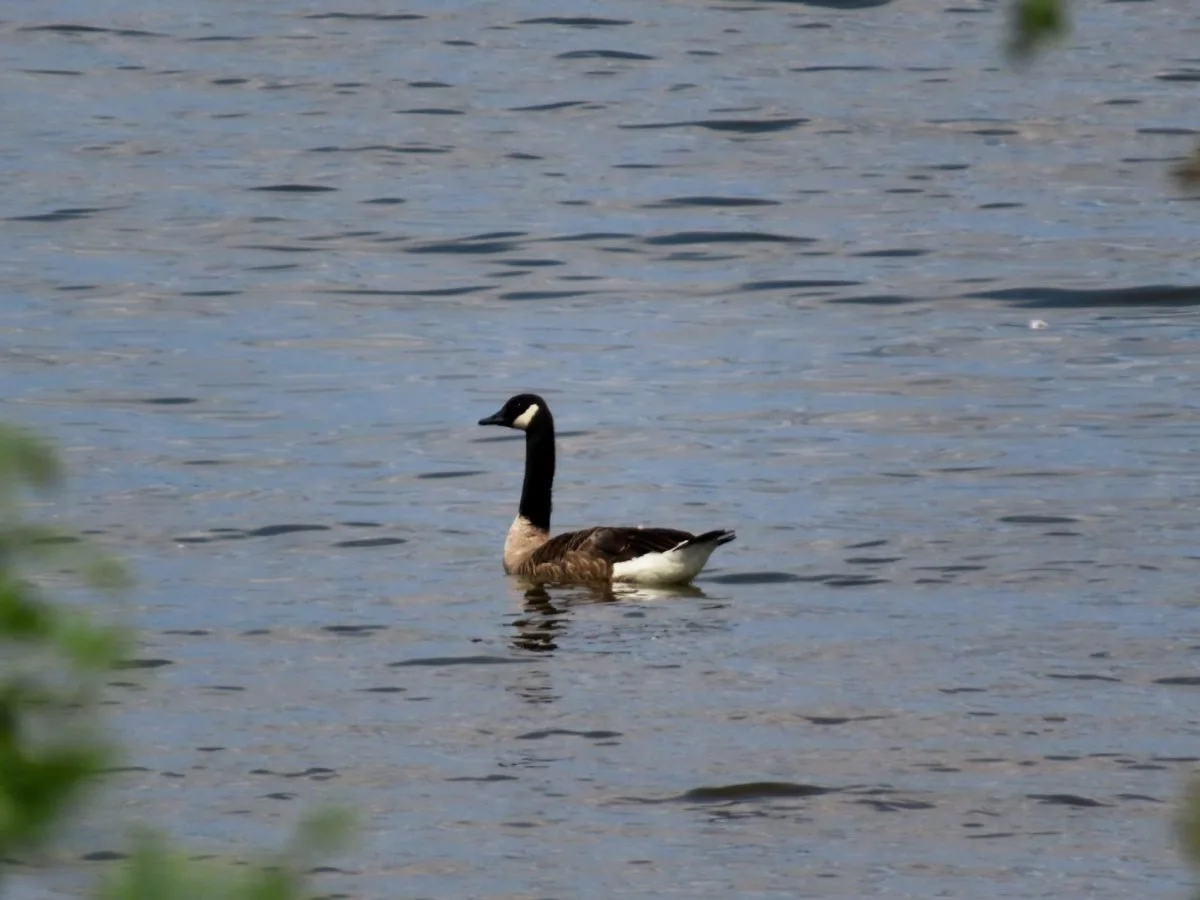
A goose swimming in the Delaware River. Saturday, July 12, 2025. National Park, N.J. (Photography by: Christopher Otto)
Rowan University officials say there have been no confirmed cases of avian influenza on campus, but they are continuing to urge students and employees to avoid contact with sick or dead wildlife as health authorities monitor reports of diseased geese in nearby communities.
In a Rowan Alert email sent early Wednesday, Feb. 17, the Rowan University Police Department (RUPD) informed the campus community that the Gloucester County Office of Emergency Management had reported possible cases of avian influenza among migrating Canadian geese in the region.
According to the Gloucester County Department of Health, multiple presumed cases of highly pathogenic avian influenza (H5N1), commonly known as bird flu, have been identified in Canada geese in the Pitman area, including Alcyon Lake Park, and in other locations throughout the county. Officials say the virus appears to be circulating among wildlife in the area, thus prompting increased monitoring and efforts to inform the general public.
While the disease primarily spreads among birds, health officials say the overall risk to humans remains low. People who work closely with animals such as poultry, dairy cattle, or wildlife may face a higher risk of exposure.
Dr. John Ekakoro, an assistant professor of epidemiology, public health, and food safety at the Shreiber School of Veterinary Medicine, said avian influenza is a virus that mainly affects birds, including backyard chickens, commercial poultry, pet birds, zoo birds, and wild birds.
In recent years, he noted, a more severe strain has also infected dairy cattle in some parts of the United States and has occasionally spread to other animals, such as domestic. Human infections remain rare and typically occur only after close contact with infected animals.
“Canada geese and other waterfowl appear to be heavily affected right now because several risk factors are happening at the same time. The current strain spreads easily among birds that gather together,” said Dr. Mohamed Abouelkhair, an associate professor of virology and clinical immunology at Shreiber School of Veterinary Medicine. “Additionally, winter conditions and long migration can weaken birds. This stress lowers their immune defenses, making it harder for infected birds to recover.”
According to the Rowan University Police Department, there have been no known reports of dead geese on campus or in Glassboro.
“The sick and dead geese that were initially discovered were in Pitman. Our most important message to the Rowan community is simply to use common sense and stay away from any obviously sick or dead birds or animals,” said Rachel Baum, chief of police at Rowan University.
Baum noted that the normal areas where the Canadian geese typically congregate on campus, such as the ponds and open green spaces, are the locations in which students should remain most aware of wildlife. Students who encounter a sick or dead bird should report it rather than attempting to move the animal themselves.
“Stay away from it and call in to report it,” said Baum. “Our communications staff will contact animal control, and they will determine if a response is warranted.”
Rowan’s Office of Emergency Management is responsible for coordinating the university’s response and communication with local officials. Steven Rolando, director of Rowan University’s Office of Emergency Management, said the university is closely monitoring the situation.
“University Office of Emergency Management is currently monitoring the situation and will coordinate with agriculture and wildlife agencies should we encounter a case on campus,” said Rolando. “Currently, Gloucester County Animal Control is charged with animal removal and disposal.”
Wildlife advocates say the public should remain informed but shouldn’t be alarmed. Natalie Evans, president of Rowan University’s Ducks Unlimited chapter, said the organization works to protect waterfowl habitats and educate students about conservation.
RU Ducks Unlimited is a chapter of the international nonprofit organization Ducks Unlimited. Rowan University’s chapter happens to be the only collegiate chapter within the state of New Jersey. The nonprofit is also one of the largest conservation organizations focused on protecting wetlands and waterfowl habitats.
“We’ve conserved, I want to say as of this year, just over 19 million acres,” said Evans. “A lot of these farmlands used to be wetlands. Duck Unlimited will often purchase farmland before big companies. Instead of selling a construction company or real estate, farmers can sell their land to Ducks Unlimited.”
Evans went on to explain that in some cases, wetlands can be restored by uncovering ecosystems that were previously buried beneath farmland. She also mentioned that the restored habitats are capable of providing important ecosystems for wildlife such as ducks, geese, otters, and other species.
“Geese get such a bad rep. They are not naturally aggressive. They’re only aggressive if they are resident geese or if they’re brooding or have babies,” said Evans.
Resident geese are birds that remain in one area year-round instead of migrating, often because they have been fed by people.
Regarding the bird flu outbreak, Evans said the risk to most students is minimal. According to Evans, those who work directly with animals, such as poultry or dairy farmers, face a greater risk.
“You’re not going to catch the avian flu unless you are actively petting a goose or touching their poop. You can’t breathe it in,” said Evans.
Avian influenza outbreaks among birds have become more frequent since 2022. The virus has the potential to spread along migration routes such as the Atlantic Flyway, which runs along the East Coast of North America and follows it from Canada down.
“Environmental conditions can also play a role in the spread of disease,” Evans said.
Harsh winter conditions may cause birds to cluster in smaller areas of open water.
“Because this winter has been a lot worse than usual, geese are all gathering in the same places where water isn’t frozen. When they gather together, it increases infection,” said Evans.
Even so, Evans said the reports of sick wildlife are difficult to see.
University officials are asking students to remain aware and report any sightings of sick wildlife on campus. If a deceased or distressed goose is found on university property, the Rowan Police Department asks that it be reported immediately at 856-256-4911 so trained personnel can safely handle the situation.
